Shared by Brhan Leibman


When Brhan Leibman was a teenager, she and her father, Wawo, would board a bus from the southern Israeli city of Ashdod to Jerusalem, 50 days after Yom Kippur. The bus was filled with other Ethiopian Jews making their way to a spot that overlooks the Western Wall to celebrate Sigd, a Beta Israel holiday that begins with a half-day fast and concludes with a celebration.
Hundreds of people, many donning white, gathered to pray. Women closed their eyes and opened their hands in an act of worship, praying for forgiveness, and renewing a covenant with God. In Ethiopia, the community also prayed to return to Jerusalem; when they finally did, they offered prayers of gratitude. Brhan didn’t speak much Amharic then, but looking at them praying, she says, “you can sense their energy and their intention in their t’fillah [prayers].”
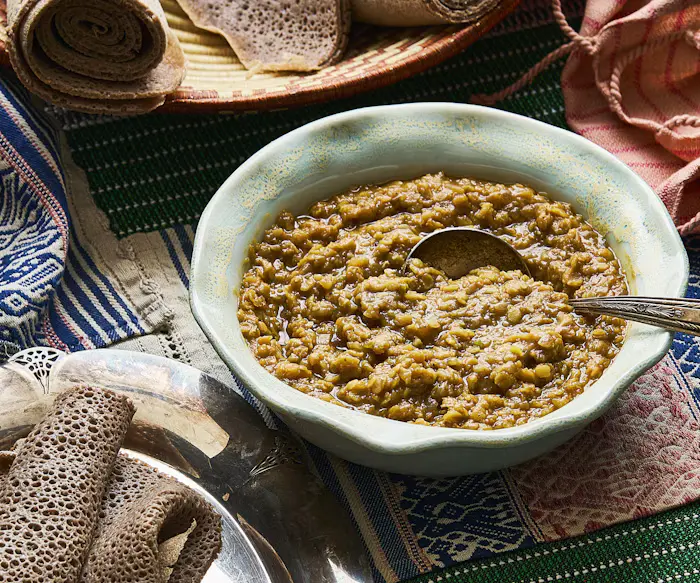
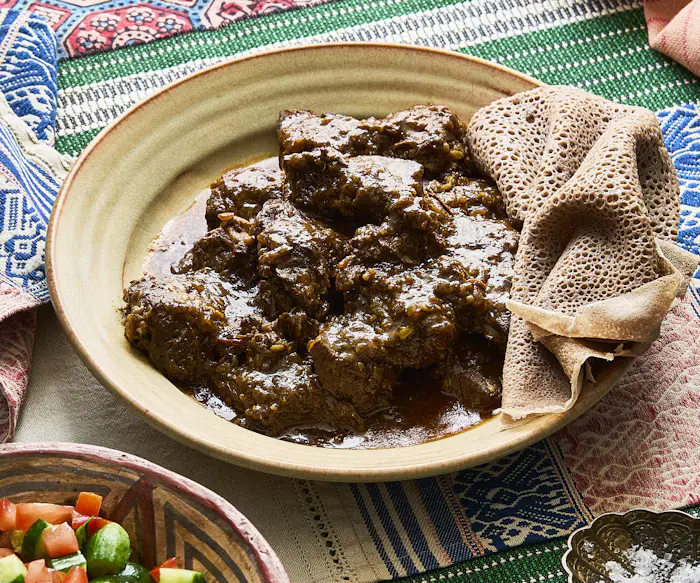
After the service, the community broke their fast with dabo, a lightly sweet traditional bread, blessed by religious leaders known as Kessim. Brhan and her dad would travel home for the coffee ceremony buna and a meal of Ethiopian dishes like the beef stew sega wat, spiced lentils known as kik, and the chicken stew doro wat. Prepared by her mother, Waga, the feast is an opportunity to deepen connections with family and friends.
Brhan’s family left Ethiopia when she was a baby and arrived in Israel in the late 1990s. Like many Ethiopian-Israelis, she grew up between two worlds. “In your house you are in Ethiopian culture with Ethiopian expectations, and when you go out of your house, you are Israeli with Israeli expectations. This gap is very hard to bridge,” she explains.
The different views on the role of the individual within a family and a community, was particularly hard for her to reconcile. In Ethiopian culture, when you’re eating injera, “you give the first bite to the person you love — you think about someone else before you,” Brhan says. “That concept is different from the individualism we live in.” Outside of her home, she felt othered and called racist names.
She felt a pressure to be more Israeli and her family started speaking Hebrew instead of Amharic at home. In her early 20s, though, she realized she couldn’t understand her grandmother Tatey, a midwife and deeply knowledgeable elder who only speaks Amharic. Brhan asked her family to help her practice their mother tongue. At first, they questioned her and even teased her about her accent, but she pushed forward and slowly, she started to understand her grandmother.
In 2019, protests erupted after an off-duty police officer killed 18-year-old Solomon Tekah, a member of the Ethiopian community. In that moment, “I understood that if I want to succeed in my life, I need to be more connected to my roots,” Brhan shares. She also wanted to help the next generation of Ethiopian-Israelis embrace their identity, to not feel embarrassed by an Amharic name or of Ethiopian food, even if others turn their nose up at it.
Brhan started with her younger siblings and today, she’s an educator and influencer who shares the traditions of her community. This year on Sigd, for the first time, she is hoping to host friends in her own home in Jerusalem, particularly those from outside of the Ethiopian community so they can "experience our culture and our Jewish day of fasting and then celebrating,” she says.
Cooking some of her mother’s recipes is still intimidating, particularly the one for siga wat, which her family makes with meat from a whole animal — either a cow or sheep — they have slaughtered and share with other families in the community. In Ethiopian culture, she explains, recipes are passed down through visual direction, not oral instruction. Wago always tells Brhan: "I'm not gonna tell you what to do. You just need to watch me.”
Brhan has mastered the spiced lentils called kik, which is a staple in her home. But, she adds: “Wish me luck because I'm going to make injera for the first time for so many people.”