Shared by Claudia Roden


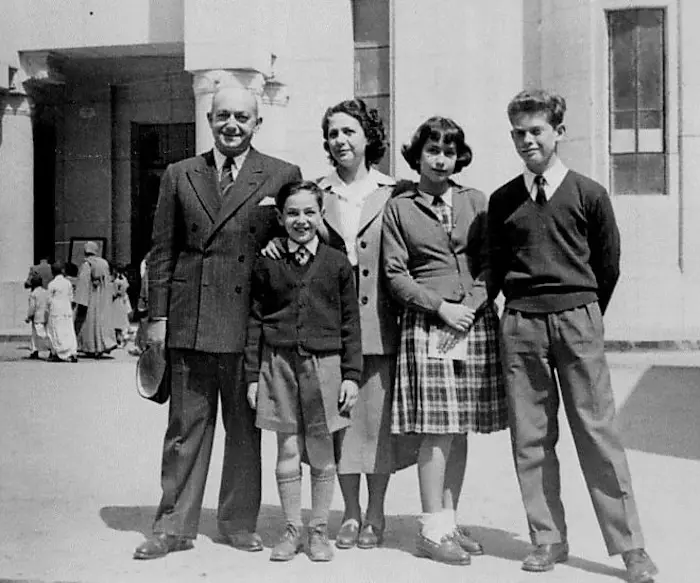
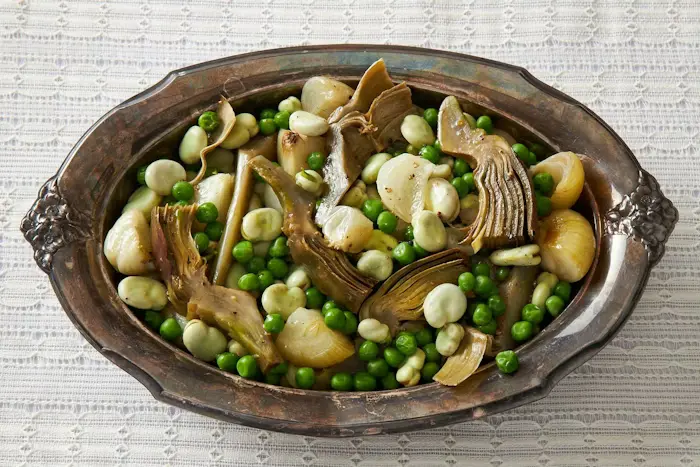
“To many Sephardi and Mizrahi communities, broad beans are a reminder of what the Jews ate during their captivity in Egypt,” shares Egyptian-born cookbook author Claudia Roden. Her mother, Nelly Douek, prepared this for every Seder.
The cornstarch thickening gives the sauce a slightly gelatinous texture, and it can be eaten hot or cold, but Claudia recommends eating it cold.
This recipe uses frozen fava beans and artichoke bottoms. However, if fresh fava beans and artichokes are available in your area, they would work wonderfully as well.
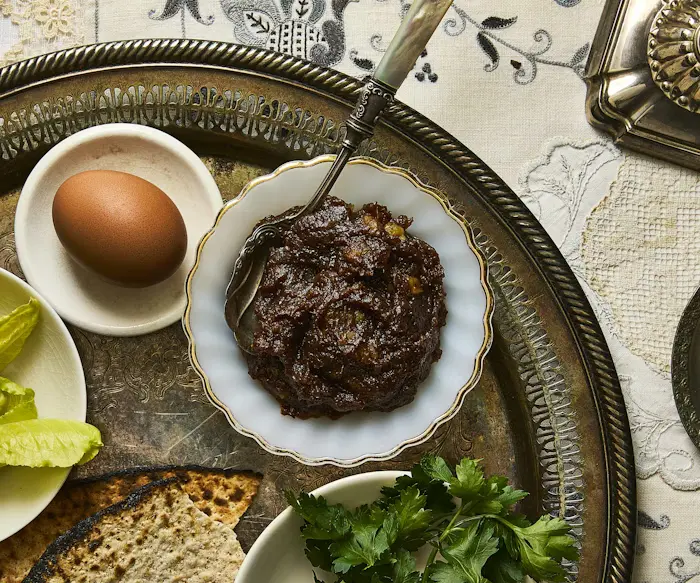
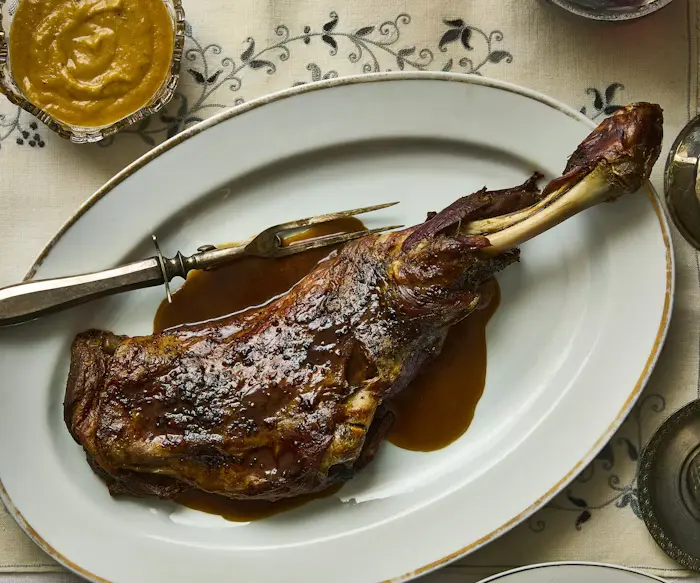
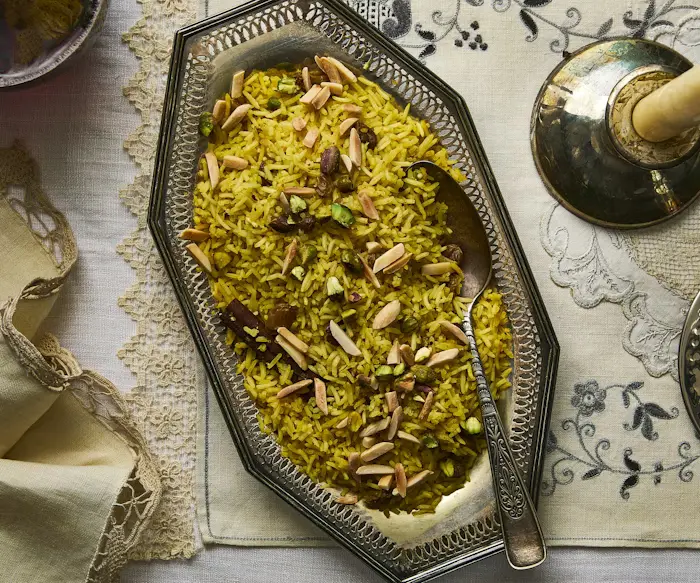
Read more about Claudia’s family in "Claudia Roden Has Carefully Preserved a Lost Jewish Egypt" and try her recipes for Egyptian charoset, slow roasted lamb shoulder with apricot sauce, spiced saffron rice with nuts, and flourless chocolate cake.
Add the water to a large, deep pan, place over high heat, and bring to a boil. Add the artichoke bottoms and fava beans, and add more water to cover them if necessary.
Bring back to a boil, then reduce the heat to medium-low, and add the salt, pepper, sugar, lemon, and garlic. Cover the pan and simmer gently for 30 minutes, until the vegetables are cooked through.
In a small bowl, combine the cornstarch with 3 tablespoons of cold water and beat with a fork, making sure the cornstarch is dissolved. Then add 2 tablespoons of the hot cooking liquid from the pan, and pour this mixture back into the pan, stirring vigorously so that the sauce does not become lumpy.
Stir in the dill and continue to simmer gently over low heat for about 10 minutes, until the sauce has thickened. Serve warm or cold.