“I can paint a portrait of my family members through their recipes and the memories of sharing borsch together,” writes Alissa Timoshkina in her new book “Lozhka: Eastern European Soups, Stews & Other Things We Eat with a Spoon.”
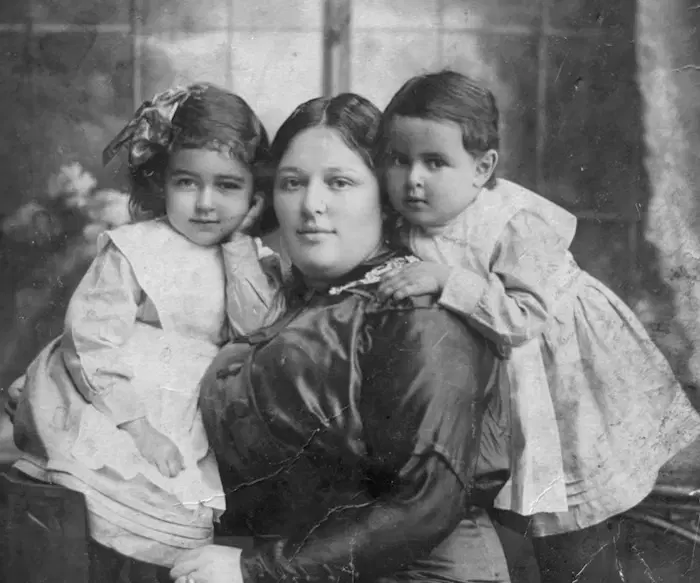
Those traditions stretch back five generations to her great-grandmother Rosalia, who was born in Crimea in 1912, and lived through the creation of the Soviet Union and the Nazi invasion of Ukraine. Rosalia helped raise Alissa in their one-bedroom Soviet era apartment in Siberia.
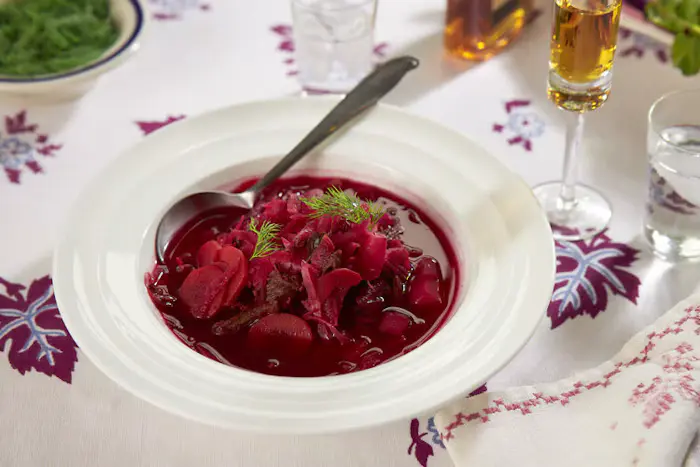
She taught Alissa nursery rhymes and shared stories of her life, including ones of borsch their family ate for Shabbat before the war broke out. One of the many variations of borsch Rosalia knew from her life was a ruby-hued soup dotted with tangy-sweet quince, a fruit that grows in the Ukrainian peninsula on the Black Sea.
Like her great-grandmother, Alissa was raised on countless pots of borsch, but she never had the quince one Rosalia told her about. When she was working on “Lozhka,” Alissa decided to try to recreate it.
As a mother of two living in London, Alissa wants her kids to have the same relationship to borsch as she has. “I’m very happy to report that even though they are born-and-bred Londoners, they absolutely love borsch,” she says.
Alissa says that a good borsch should balance sweetness and acidity. In this version, fresh quince provides the tang, while caramelized beets and sugar lend sweetness to the pot. The quince is essential and cannot be substituted, so keep an eye out for it at the market. Its season is short, but this recipe is well worth the wait.
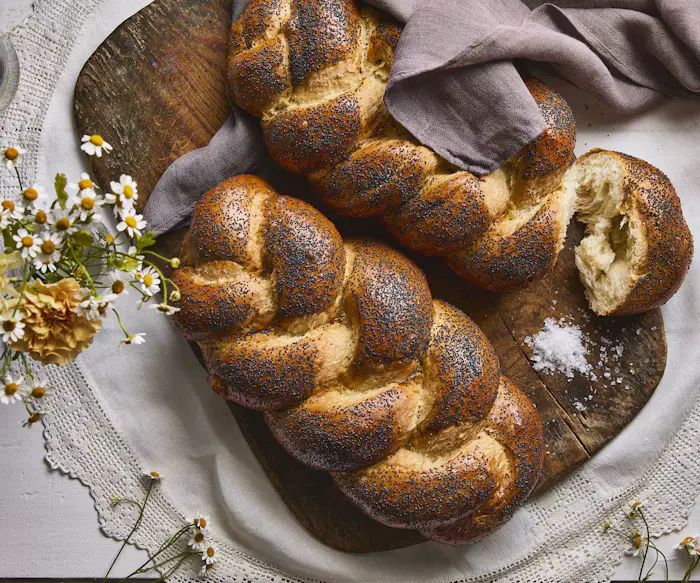
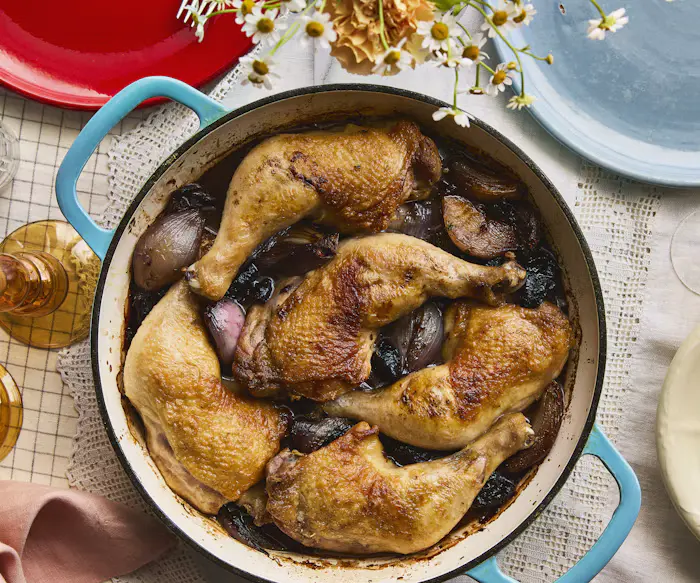
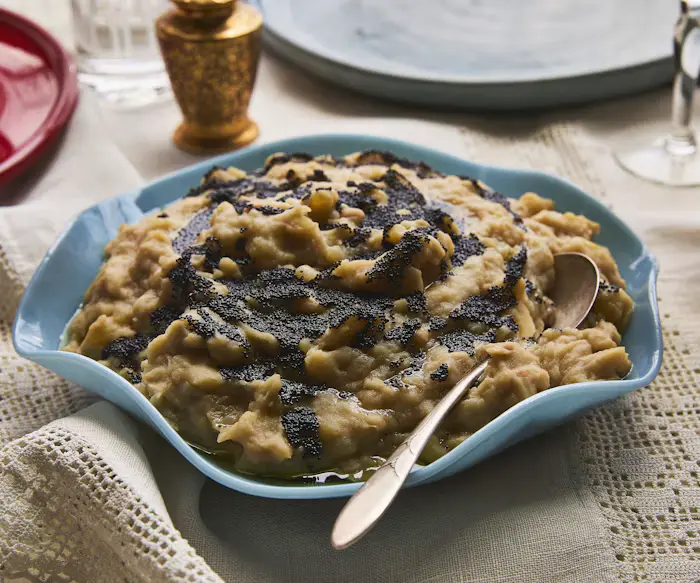
Read more about Alissa’s family in “From Crimea to London: Two Shabbat Celebrations 100 Years Apart” and try her recipes for a traditional challah with poppy seeds, chicken with prunes, beetroot with pickled cucumbers salad, and a tovchanka (Ukrainian potato and bean mash).