Shared by Alissa Timoshkina


Alissa Timoshkina is a London-based food writer who was born and raised in Siberia. She is the author of “Salt and Time: recipes from a Russian Kitchen” and “Kapusta: vegetable-forward recipes from Eastern Europe.” In 2022 she co-founded #CookforUkraine, a fundraising campaign that raised over £2.5 million for the children in Ukraine. Here, she shares her story in her own words.
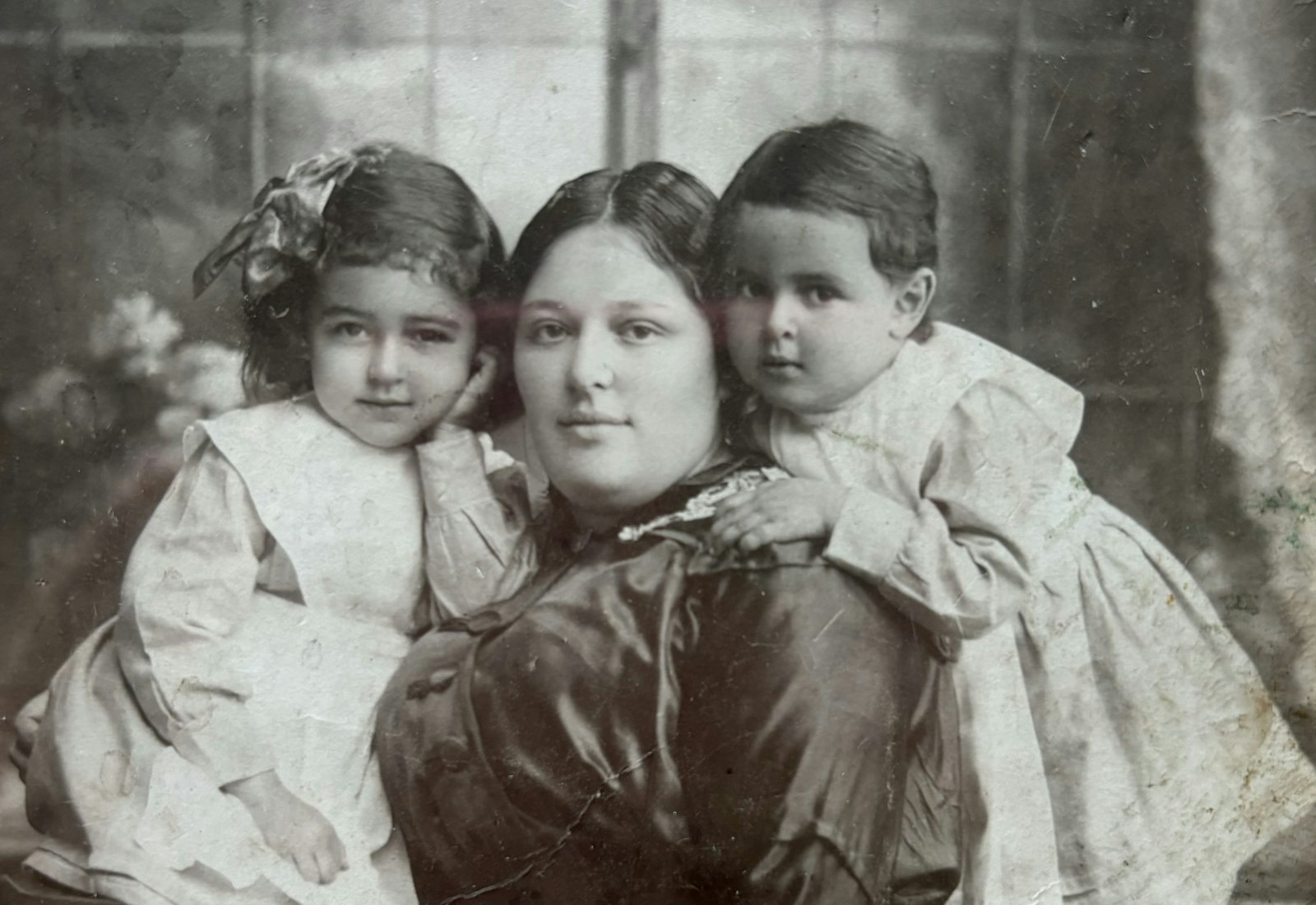
Whenever I think of my childhood, the figure of my great-grandmother or prababushka, Rosalia, comes to mind. She was only in her early 70s when I was born, so the role of caretaker fell to her. My grandparents were years away from retirement and my parents were still finishing their university degrees in the Siberian city of Omsk where we lived.
Rosalia moved into our Soviet-era one-bedroom flat, and that bedroom was ours to share. To me, the Rosalia that I knew as a child was a petite, elderly woman with short grey hair, which gave only a subtle hint of the raven black mane she once had. And she would slide rather than walk down the long shady corridor of our flat that led towards the kitchen. Always the kitchen. That was her domain. Until this day, the smell of a hot oven with a touch of burnt residue, always reminds me of her. The food of my childhood came out of her hands. Food and storytelling were her superpowers.
After a day in the kitchen, every evening she would sit on the edge of my bed and tell me stories. Slavic folklore, literature, and family history found their way into her tender whisper. One of the stories I asked to hear on repeat was about the raid on Rosalia’s family house. It was the early 1920s, and the Soviet revolutionary army was roaming its way across Ukraine where we are from, eventually finding its way into my family’s dining room in Crimea. “We were having dinner, and suddenly a group of men stormed into the house. All clad in leather jackets, they started grabbing everything in sight: our family china, the silverware, the table linen, and our special set of candle holders,” she would say.
Rosalia was born in 1912 in Simferopol, Ukraine. Her family enjoyed relative prosperity — as much as an ethnic minority could living within the Pale of Settlement under Nicholas II, the last Russian tsar. Jews of the Russian Empire did not have absolute religious freedoms, but neither was Judaism banned outright. With the onset of the Soviet regime in 1922, however, the brief hope of Jewish emancipation and religious integrity was brutally crushed. One’s Jewish identity became something to be whispered about. Religious holidays and life-cycle ceremonies were either marked in secret or completely abandoned, in hopes of a better future through assimilation.
In 1941, one’s Jewish identity became a death sentence. When the Nazis invaded Ukraine, they immediately began mass annihilation procedures, which later became known as the Holocaust by bullets. A new life chapter began in my family’s life, which counted a miraculous escape from a mass execution, years of living in hiding, and relocation to Siberia.
By the time I was born in the early 1980s, our family’s Jewish lineage was an unspoken fact — an experience felt intuitively, rather than an openly acknowledged history. There were no holidays to celebrate, no synagogues to go to, only the memory of the Holocaust and the delicious food Rosalia made: challah, babka, knishes, forshmak, blintzes, borscht, gefilte fish, and poppy seed rugelach. That was the extent of my Jewish vocabulary.
Years later, my coming of age coincided with my relocation to the United Kingdom. A major shift in my sense of self, it also awakened a passion for Jewish history, culture, and food. I explored my family’s Jewish lineage in my A-level art projects, wrote a PhD on the memory of the Holocaust in the Soviet Union, and worked with various Jewish cultural organizations in London. However, it was not until I became a mother and started working on my first cookbook, that the practice of cooking Ashkenazi food and marking Jewish holidays became a natural part of my personal life.
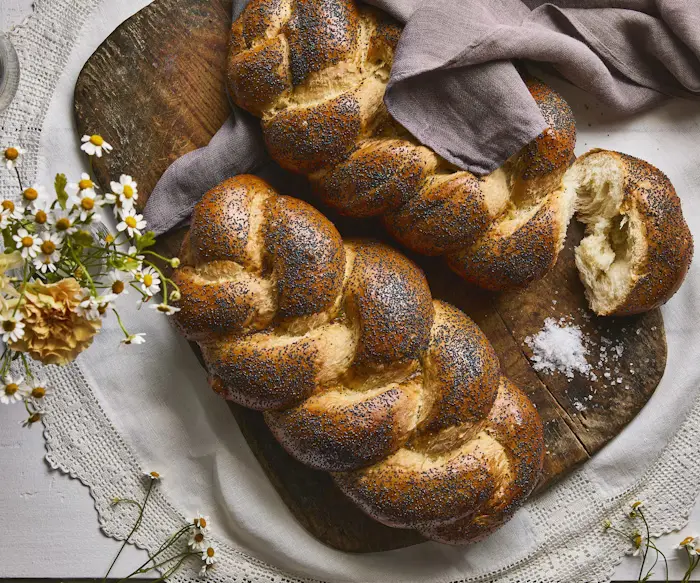
As my daughter, Rosie, grew older, she joined me in the kitchen, asking questions about the woman whose name she carries, and soaking up all the stories and rituals of the Jewish table. For us, baking and cooking feel like a form of dialogue with Rosalia and our Jewish ancestry. As I prepare our challahs on Friday, I feel connected — not just to myself and to my prababushka, but to generations of women before me who have shaped loaves for Shabbat since time immemorial.
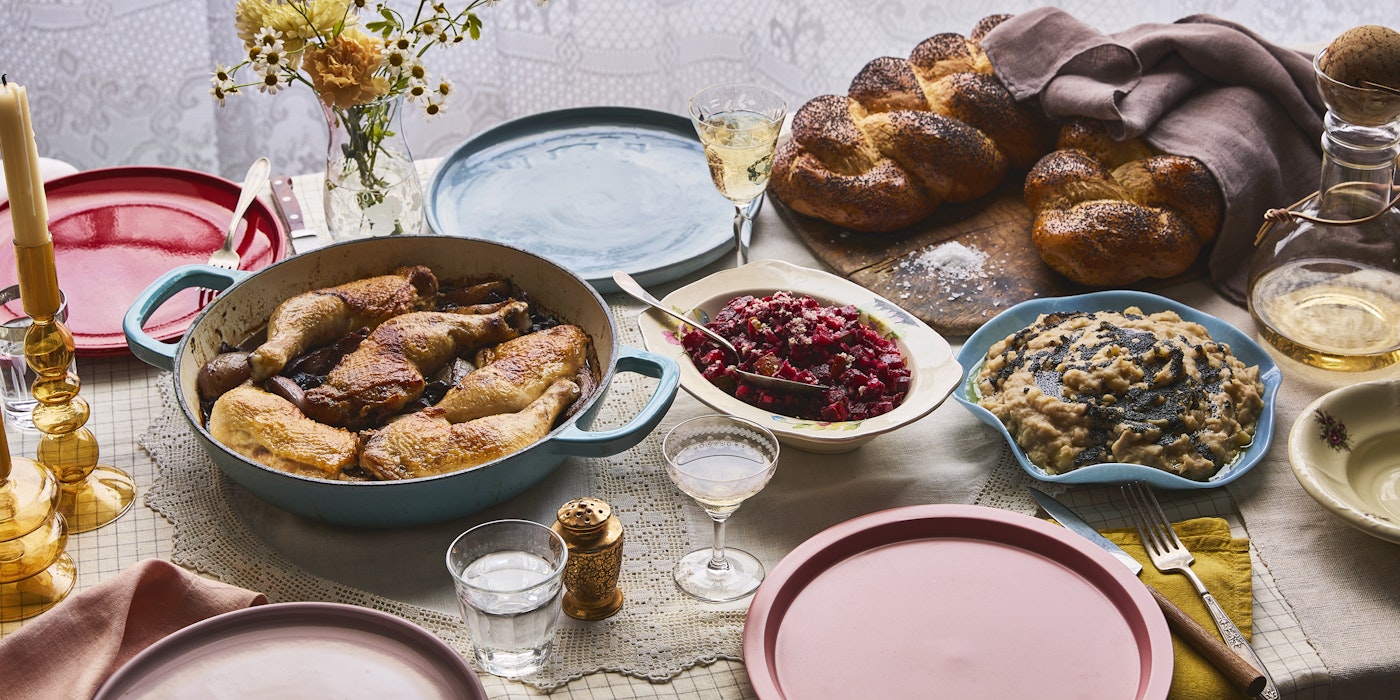
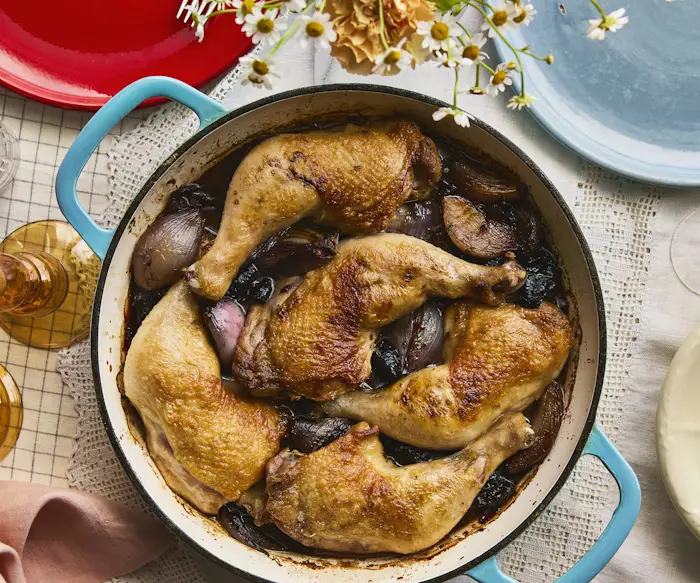
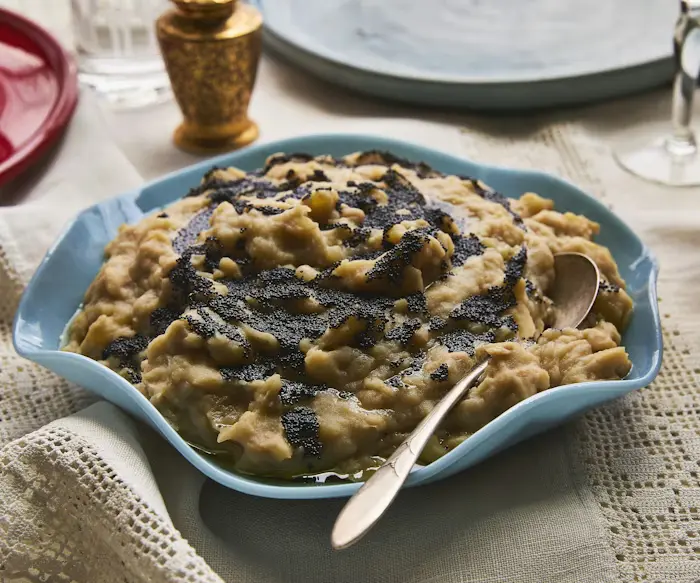
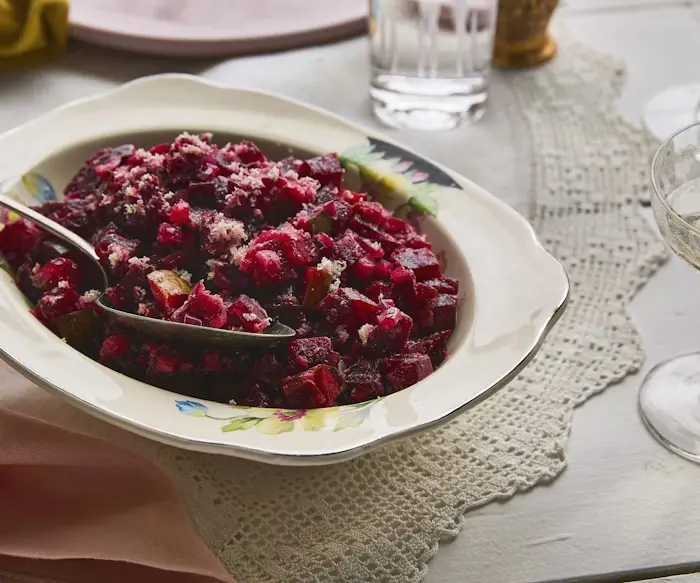
I always cook Eastern European food on Friday nights. It’s my way of ensuring my kids remain close to my family, albeit symbolically. My typical menu includes a humble chicken like one with prunes, staples like potatoes sometimes mashed with beans, and always something pickled or fermented like beetroot with pickled cucumbers. There is plenty of dill too, of course!
One evening, as we placed our second-hand candle holders on the table, it suddenly dawned on me: the raid on Rosalia’s house must have happened on Shabbat — that was what made those candle holders in her story so “special.” Since then, I like to imagine that my pair are the very same ones, mysteriously resurfaced on Etsy and finally returned home to me. Now, every Friday when we light the candles, we symbolically reclaim our Jewish lineage that was stolen by the Soviet state.