Cart0
Your cart is empty
Shop products

Shared by Maya Yadid

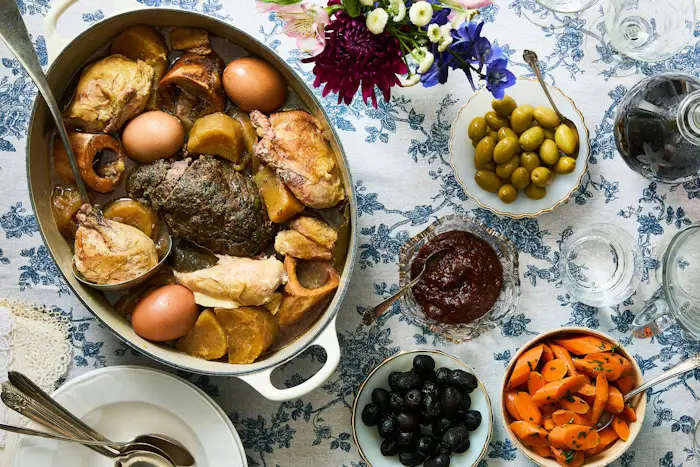
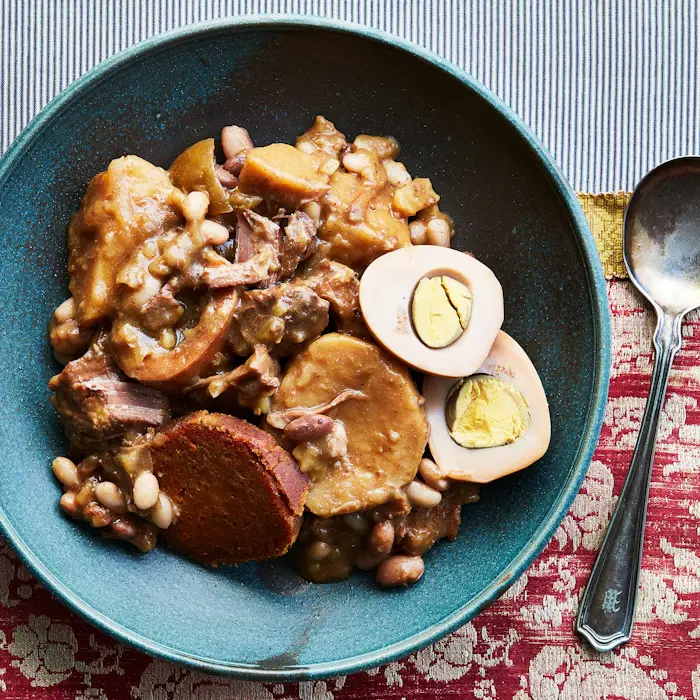
Hamin with Rice-Stuffed Steak and Kuklas (Bread Dumplings)

Yield: 8-10Time: 2 hours, plus overnight cooking

Shared by Maya Yadid

Photographer: Armando Rafael. Food stylist: Judy Haubert. Prop stylist: Vanessa Vazquez.
Last Update:

Hamin with Rice-Stuffed Steak and Kuklas (Bread Dumplings)

Yield: 8-10Time: 2 hours, plus overnight cooking

Family Journey

Urfa, TurkeyJerusalem
Pine Plains, NY

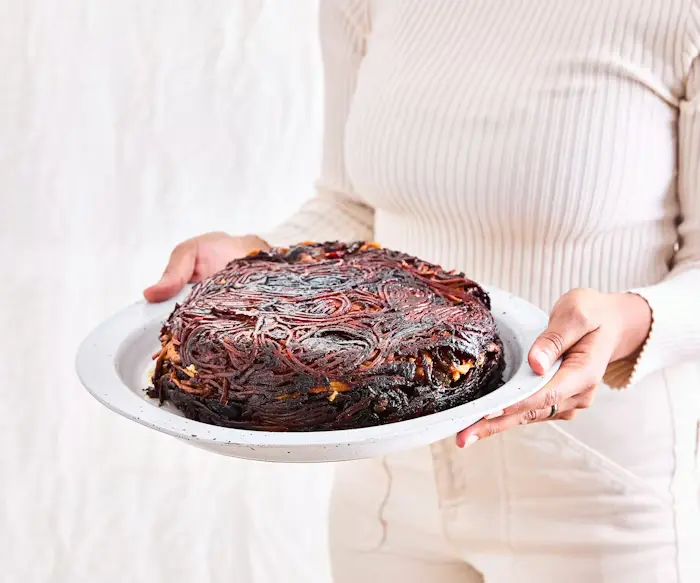
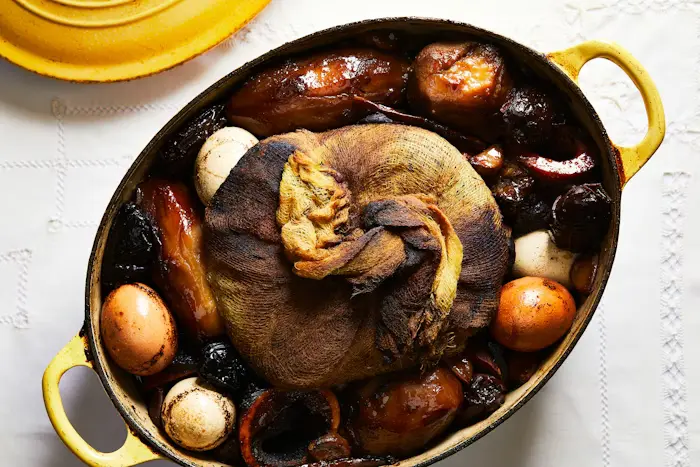
A wintery Shabbat morning in Maya Yadid’s family home in Jerusalem often meant hamin. Sometimes it was a macaroni hamin (slow-cooked chicken and pasta casserole) and on special occasions — this elaborate hamin, featuring rice-stuffed flap steak and bread dumplings called kuklas. This recipe can be traced back to her great-grandparents in Urfa, Turkey. Older versions included stuffed kishke (intestines) and kirshe (stomach), but they are labor intensive to prepare and as they became harder to source, the recipe evolved. 

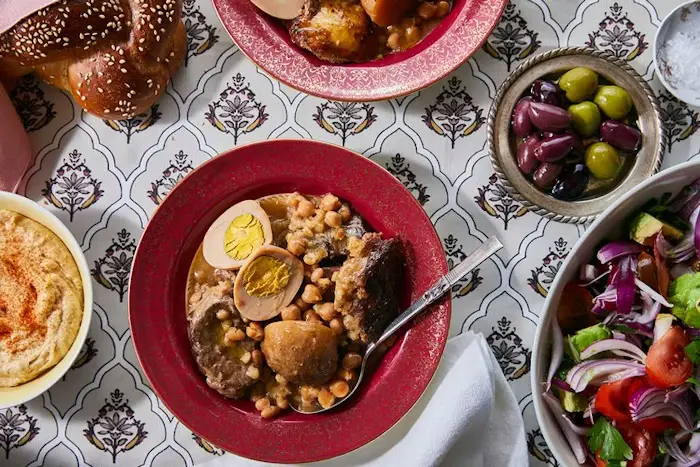
Maya enjoys it most when “the pro” — her mom, Irit — visits her in Upstate New York and makes it for her family. It’s always served with an array of fresh, tangy sides to balance its richness like Irit’s schug (Yemenite hot sauce), pickles, fresh garden cress, and tahini.

Cooking notes: For the rice-stuffed meat, the Yadid family uses flap steak. Use a wide 2-pound steak (about 8×10 inches) that’s about 1½ inches thick. If needed, trim the edges of the steak or surface to create a neat fold—the trimmings will be added to the rice stuffing. Stuff the steak with rice and sew it shut using a trussing needle and cooking twine. For a kosher cut that’s easier to find in the U.S., a good alternative is the flat cut of brisket with a deep pocket cut into it (ask your butcher to do this).

The stuffed meat is the star of this hamin, but to simplify the recipe, you can replace it with an additional 1½ pounds of cubed boneless short rib.

Adding kuklas (bread dumplings) is optional. They cook overnight in the hamin, soaking up its rich flavors. Make sure to use stale challah so it doesn’t disintegrate — if you only have fresh, dry it in a 300°F oven for about 20 minutes. If your challah contains eggs, you may not need to add an extra egg to the kuklas mixture. 

Read more about Maya’s family in “The Festive Hamin in Artist Maya Yadid’s Family Evolves With Time”.

Ingredients

For the stuffed flap steak:

  • 2 pound flap steak, about 1½-inch thick, trimmed to about 8x10 inches (save trimmed ends for stuffing)
  • ¾ cup medium-grain rice
  • Kosher salt 
  • Freshly ground black pepper

For the Hamin:

  • 1½ pounds beef short ribs, cut into large cubes 
  • 3-4 marrow bones 
  • 3 cups dried cannellini beans, soaked in water for 12 hours 
  • 2 heads of garlic, cut in half crosswise
  • ¼ cup neutral oil, plus more
  • 2 tablespoons kosher salt, plus more
  • 1 tablespoon freshly ground black pepper, plus more
  • ¾ tablespoon sweet paprika 
  • 1 teaspoon smoked sweet paprika 
  • 1 teaspoon hot paprika
  • 5-7 medium Yukon gold potatoes, scrubbed 
  • 1-2 medium sweet potato, cut into 2-inch pieces 
  • 8 hard-boiled eggs (or one per person)

Ingredients for the Kuklas (optional):

  • 1 loaf stale challah, torn into pieces
  • 2 tablespoons neutral oil
  • 1 onion, finely chopped 
  • 1 egg, if needed
  • 1 teaspoon kosher salt 
  • 1 teaspoon freshly ground black pepper 
  • 1 teaspoon sweet paprika 
  • Neutral oil for deep frying 
  • ½-1 cup breadcrumbs (if needed)
Main CoursesMeat Overnight ShabbatMiddle East

Preparation

  • Step 1

    Prepare the stuffed flap steak: In a bowl, add the rice and the flap steak trimmings and season generously with salt and pepper. Place the flap steak on your work surface with the grain running horizontally. Season generously with salt and pepper on both sides. Spread the rice mixture over the bottom half of the steak, leaving a 1½-inch border. Fold the top half over the rice and sew the edges closed with small stitches about ½-inch apart.

  • Step 2

    Prepare the kuklas (optional): Heat 2 tablespoons of neutral oil in a pan over medium heat, add the chopped onion and fry until golden, about 5-7 minutes. Set aside to cool.

  • Step 3

    Soak the challah pieces in a bowl with water for 3-5 minutes, until soft. Then squeeze out all the liquid.

  • Step 4

    In a bowl, mix together fried onions, squeezed challah, salt, and spices until a uniform mixture forms. If the mixture feels too dry, add the egg. If it feels too wet, add some breadcrumbs until the mixture is easy to work with. Then shape the mixture into 20-24 round and flat dumplings, about 2 inches wide. 

  • Step 5

    Heat 1½ inches oil in a deep skillet over high heat until the surface shimmers, but does not smoke. To check if the oil is hot enough, insert the end of a wooden spoon into the skillet — if it bubbles gently around the wood, the oil is ready. If it bubbles vigorously, it's too hot. Fry in batches on both sides until golden brown, about 3 minutes per side and transfer to a tray lined with paper towels. Set aside.

  • Step 6

    Season the marrow bones and short rib generously with salt and pepper. Set an 8-quart, heavy-bottomed, oven-safe pot over high heat. Add 2 tablespoons of oil and sear the marrow bones and meat until well browned, about 3–5 minutes per side. Leave the meat drippings in the pot. 

  • Step 7

    Preheat the oven to 250°F.

  • Step 8

    In the same pot, layer the ingredients in the following order: bones first, then beans, garlic, ¼ cup oil, and short rib. Then, place the stuffed meat on top.

  • Step 9

    In a bowl, mix the spices with 3 cups of water and pour into the pot. Add more water if needed until everything is covered. Bring to a boil over high heat. Lower the heat to medium, cover with a lid, and simmer for 30 minutes, turning the stuffed meat halfway so it absorbs the liquid evenly. 

  • Step 10

    After 30 minutes, use big tongs to carefully lift the stuffed meat and transfer to a plate. Add the potatoes, sweet potatoes, and hard-boiled eggs. If making kuklas, add them now as well. Leave a space in the center of the pot for the stuffed meat. Place the stuffed meat back in the pot and add more water if necessary — it should nearly cover the stuffed meat.

  • Step 11

    Cover the pot with aluminum foil, then seal tightly with a lid and place in the oven for 14-16 hours. After 4 hours, check the liquid and add boiling water if needed. Repeat this once or twice during cooking. By the end, most of the water should be absorbed into the hamin — add just enough to keep it from burning.

  • Step 12

    For serving, transfer the stuffed meat to a cutting board. Using kitchen shears, remove the twine, then slice against the grain and serve hot with the hamin.