Shared by Jessica and Trina Quinn

Editor’s note: Catch Jessica and Trina Quinn at The Grandmas Tent at The Great Nosh where they will share their secrets for the perfect piroshki. Get your tickets!
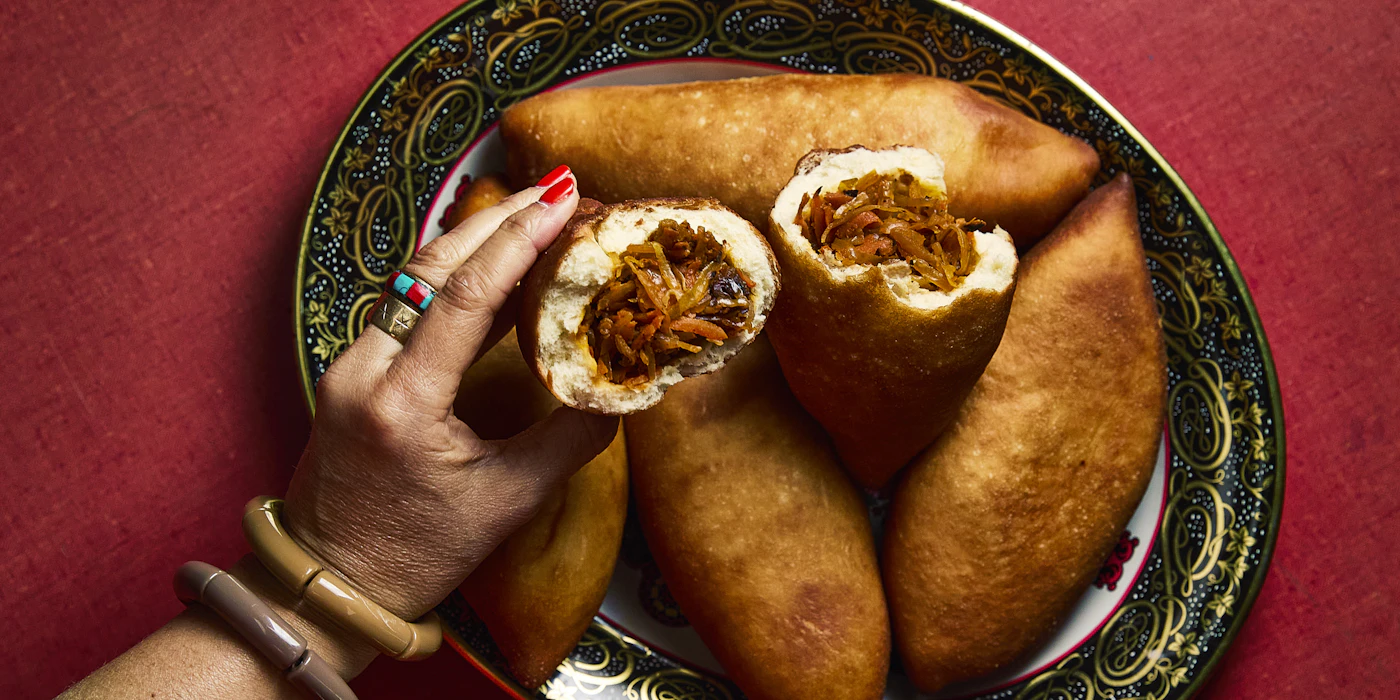
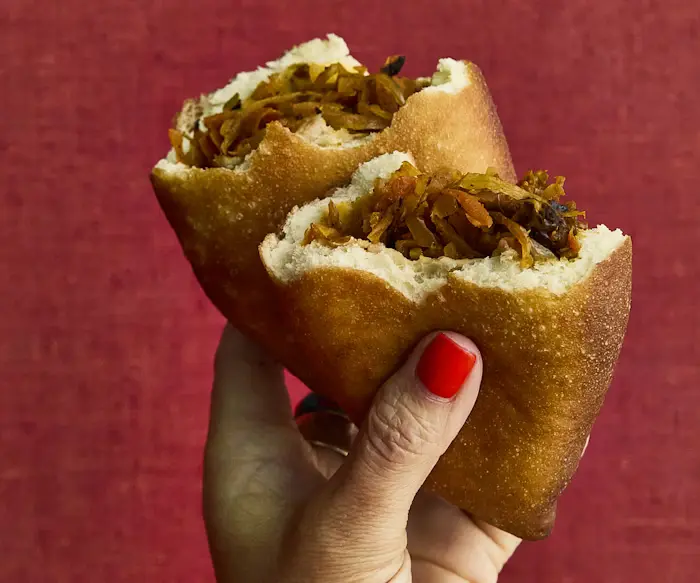
Early in their relationship, Jessica Quinn needed to gently bribe her now-wife Trina with snacks to get her to the beach in Brooklyn. “I was never a beach person,” Trina concedes. Jessica grew up in the ex-Soviet enclave of Brighton Beach and knew exactly where to take Trina. They picked up a selection of hefty, deep fried piroshki — large dough pockets filled with meat, vegetables, eggs, or even fruit — and a bag of cherries and headed for the sand. Trina took a bite, Jessica recalls, “and then very aggressively [said]: ‘Why have you been keeping this from me?’”
The chef duo, who married in 2016, have embraced the foods of Jessica’s Latvian-Ukrainian Jewish heritage through Dacha 46, a queer food project they started during the pandemic. Unlike restaurants, which focus on taking care of the customer, Jessica explains, “The inception of Dacha was a means to take care of ourselves. It was a way to reconnect with where I come from, for us to connect together as a family, and with the culture. We are so overjoyed to be able to share it with other people, but it’s such a personal, self-discovery.”
Jessica’s family left the Soviet Union in the early 1980s as part of the first major wave of Jewish emigration — her father’s family from Zhytomyr, outside of Kyiv, and her mother’s family from Latvia's capital Riga. They settled in Brighton Beach, where Jessica was born, and even when her family moved to Long Island, they returned every weekend.
In the 1990s, the neighborhood was predominantly Russian-speaking Jews. Her family and friends were what Jessica calls “party Jews,” celebrating holidays and Jewish culture — but, she adds, it wasn’t “uncommon to go to a Jewish wedding with an all you can eat shrimp cocktail buffet.” The neighborhood was perhaps a bit cagier, yet more fun and vibrant back then, Jessica adds.
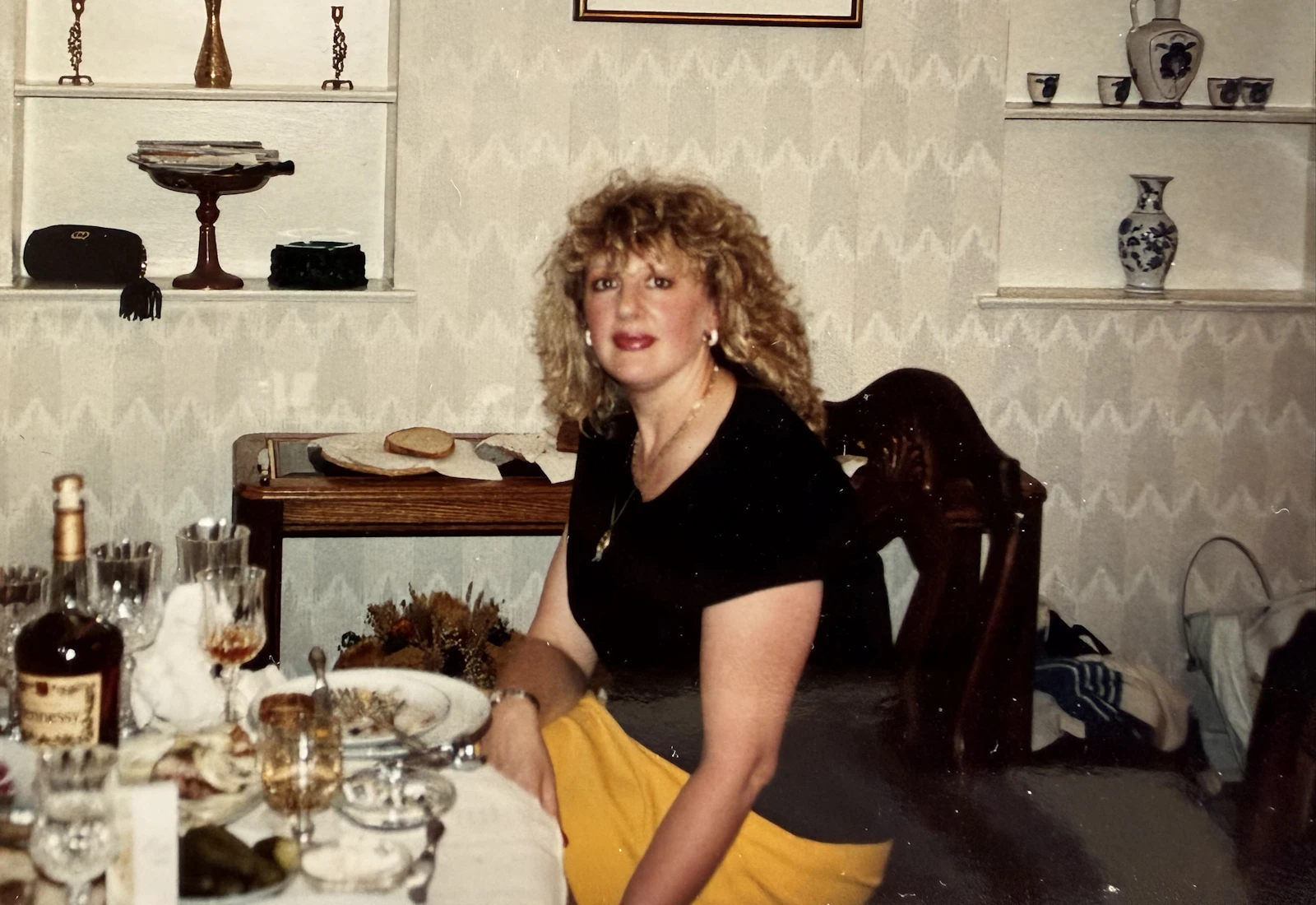
Her family ate out often — Chinese, Italian, and other cuisines they had access to in their new home. Being able to afford that luxury felt like part of living the American dream. But at home, they ate exclusively Soviet foods. “I was made of mayonnaise,” Jessica jokes. “We had all the traditional dishes: Uzbek lamb plov, salat olivier, and shuba.” Her grandmother, Baba Riva, made piroshki and exceptional walnut cookies called oreshki.
On their trips to Brighton Beach, her family made a regular pilgrimage to M & I International Foods for salamis, grilled meat called shashlik, and hot piroshki from the stand outside that they ate in the car on their way home. While she concedes that nostalgia is at play here, Jessica explains: “I have not had one that good since then.” When Trina protests, asking about the sour cherry piroshki they made recently, Jessica responds: “Those were fantastic, but I was not six years old in the back of my dad's car with my feet up on my sister's face eating piroshki — it's a very specific period of time.”
***
When she came out at 19, Jessica didn’t feel accepted as a queer person in her community. “It was really challenging. I love my identity and I love my culture and I love my family, but for me, I very much felt like I had to give up something. I distanced myself from the culture, the food, the whole thing,” she shares.
It was Trina who helped Jessica find her way back. When they visited Brighton Beach, Trina would try to hold Jessica’s hand and Jessica would pull back, afraid that passersby would stare. Trina pushed her, saying: “So what?” Jessica acknowledged, “‘I actually don’t know.’ There was such a deep seated anxiety that these people that I wanted to accept us wouldn't. Ultimately, I got over it.”
Dacha has served as a path for exploration and re-establishing a lost connection. “It’s a love letter to our story as a family, to my history, and my family, but also it's an evolution of the state of the world and how we find ourselves in it,” Jessica shares. That evolution took a sharp turn over the past few years. They felt shut out by their queer food community, receiving hateful messages from people they once considered friends. “We were destroyed,” Trina shares. They pulled back on the business, despite plans for a brick and mortar location and a line of frozen pelmeni. “We did our best to keep going with Dacha, but I wanted to shut it down,” she adds.
Yet, their Jewish community has grown during these years, as has their relationship to it. “How we move through the world just shifted,” Jessica shares. Last summer, Trina completed her conversion to Judaism with her mikveh dip in the Atlantic Ocean in Brighton Beach. “Converting wasn’t about obligation, it was about love, healing, educating myself with intention, and choosing to grow deeper into the life and family we’re building. It felt like returning to something already mine,” Trina wrote on Instagram.
As for Dacha, they have forged a path forward, continuing to cook their food in a way that nourishes them. “We found our voice to be even stronger and more, I think, authentic to who we are,” says Jessica.