Among the things Rabbi Arielle Stein inherited from the women of her family are silk scarves from her grandmother Sara’s collection, a love of fashion (you might know Arielle as the rabbi with a freaky shoe collection) that can be traced back to her great-grandmother Yehudit, and this spice cake that’s been made by three generations of women before her.
The recipe can be traced back to Yehudit who fled Poland around the turn of the 20th century. She was only 11 or 12 when her family home was set ablaze during a pogrom and they were forced to escape into a rainy night in a covered wagon. “It was a terrifying experience that haunted her for her entire life,” Arielle shares.
When the family settled on the Lower East Side, Yehudit and her sisters all became seamstresses. “My mother remembers her telling stories of the outfits she made for herself, including an all-lavender knitted suit that she wore to visit cousins in Philadelphia [where] she was photographed for the local newspaper,” Arielle adds.
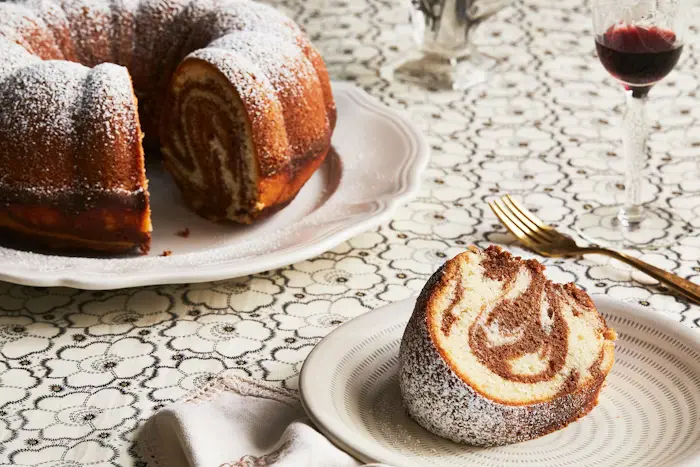
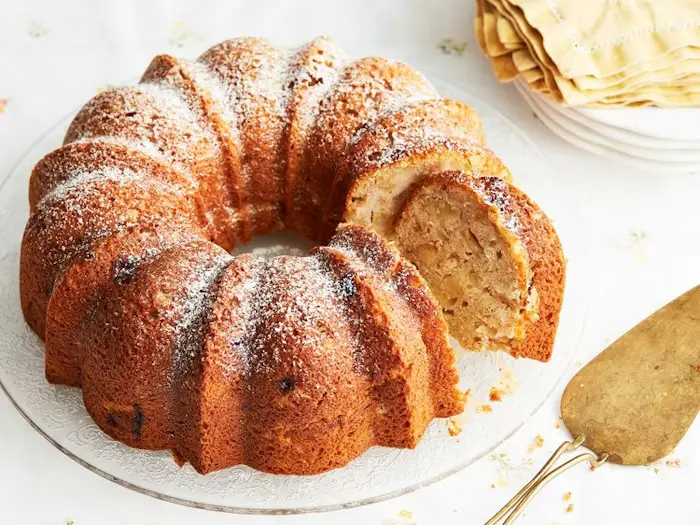
Yehudit baked this spice cake laced with cinnamon, nutmeg, and cloves for holidays and Shabbat — and it was the only time she was willing to use sugar in her cooking. The recipe was later taken over by her daughter-in-law Sara, whose husband Avraham Soltes was a rabbi in the 1940s at the same synagogue where Arielle now works in Manhattan.
In the 1990s, Arielle’s mother Dafna added her own touch to the recipe: covering the top with chocolate frosting. The scent of the cake always reminds Arielle of holidays at her parents and grandparents’ homes, but more recently, she baked it in her own home in Brooklyn for the first time. Making her family recipes has “felt like stepping into that lineage,” she says. “I feel very connected to the women who came before me.”
Cooking note: This recipe is a Depression Cake, a type of cake that became popular in the 1930s during the Great Depression, when ingredients like milk and eggs were considered luxuries. Though it contains no dairy or eggs, the cake remains fluffy.