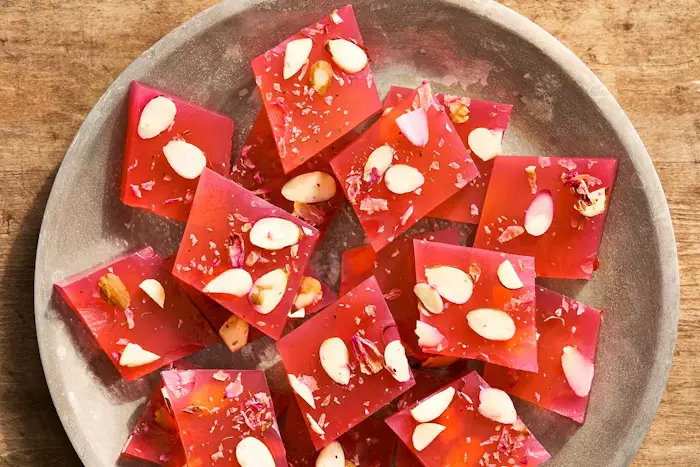
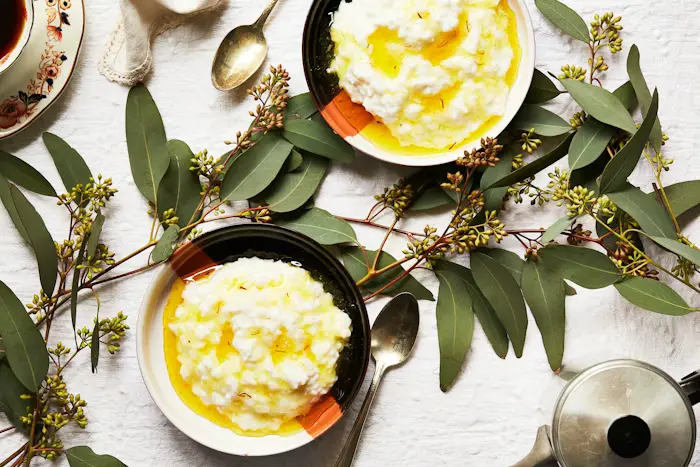
At festive gatherings during her childhood, Sandra Esses remembers her mother Sarine placing a silver bowl at the center of the table surrounded by small silver cups and delicate spoons. It was filled with heitaliyeh — cubes of pudding in a chilled syrup that sits somewhere between a dessert and drink. The dish has roots in Syria where it’s made with milk, while dairy free (pareve) versions are popular in the Syrian Jewish community.
“My mother was an incredible hostess,” Sandra shares. Within the Jewish Syrian community in Panama where her family lives, Sarine was renowned for her warm hospitality and for the recipes she learned from her own mother, Saluj Sutton.
Born and raised in Syria, Sarine and her husband Isaac lived in Lebanon for a time and moved to Panama in 1958, joining a small Sephardic community that started with Jews who had arrived from Caribbean islands such as Curaçao. With the opening of the Panama Canal in 1914, Syrian Jews — mostly merchants — saw Panama as a place of both economic opportunity and personal safety. Today it is home to between 15,000 and 17,000 Jews, many of them with Syrian ancestry.
During the family’s first decades in Panama, heitaliyeh was reserved for special occasions — it was labor-intensive to prepare, and its ingredients were costly and not always easy to find. When Sarine made it, she would ask Sandra to stir the cornstarch mixture constantly to prevent it from burning. “It was truly traumatic,” Sandra laughs — a memory that kept her from attempting the dish again for decades.
The recipe might have been lost to time, if not for a community cookbook, “El Sabor de la Tradición” (“The Taste of Tradition”) published by WIZO in 1993. Sarine was asked to contribute her beloved heitaliyeh recipe and the dessert slowly started to reappear at bar mitzvahs, brit milahs, and holiday celebrations.
But Sandra credits the return of heitaliyeh to her own family’s table to her niece Monica. When she went to Monica’s house one day to make it, Sandra realized something had changed. “The recipes from 50 years ago no longer take the same time today. The ingredients have changed, and the equipment is more efficient and user-friendly,” Sandra says. “The trauma is gone,” she laughs. Today, they make it in memory of her mother.
This piece was written by Ronit Avidan Sheinfeld.